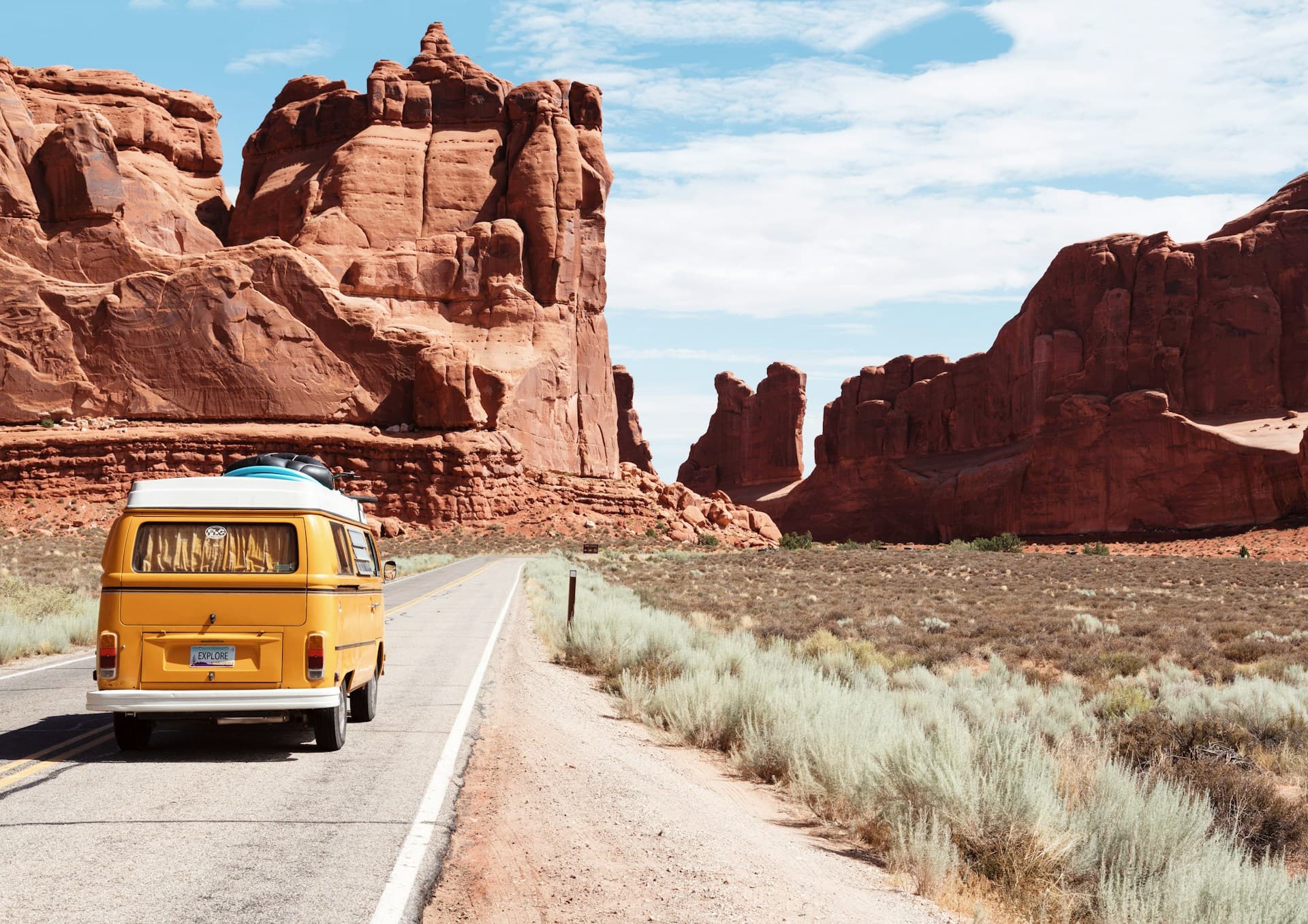
The Blue Ridge Parkway is one of America's most iconic scenic drives, and for RV travelers, it's a bucket-list journey through the heart of the southern Appalachian mountains. This guide covers everything you need to plan a successful trip down the North Carolina section of the Parkway—from RV-critical tunnel clearances to seasonal timing, campground details, and essential services.
What Makes the Blue Ridge Parkway Special for RV Travelers
The Blue Ridge Parkway stretches 469 miles across Virginia and North Carolina, with 252 miles running through North Carolina from the Virginia border at Milepost 216.9 all the way to Cherokee at Milepost 469. Unlike interstate highways, the Parkway enforces a 45-mph speed limit, prohibits trucks and commercial vehicles, and—best of all—charges no entrance fee. Constructed over 52 years (1935–1987), this National Scenic Byway connects you to two of the nation's most important mountain destinations: Shenandoah National Park (via Skyline Drive at the Virginia end) and Great Smoky Mountains National Park (at the Cherokee end). The drive is pure scenery: ridgelines, waterfalls, wildflower meadows, and views that stretch for hundreds of miles on clear days. For RV travelers, the Parkway offers a unique combination of slow, deliberate driving through pristine mountain landscape, excellent campgrounds with reasonable rates, and the opportunity to base yourself in one place while exploring dozens of trailheads, overlooks, and attractions within a few minutes' drive. For a curated list of the best campgrounds along the route, see our Blue Ridge Parkway RV Parks guide.
However, the Parkway's charm comes with a critical planning requirement: 26 tunnels carved through solid rock puncture the North Carolina section of the route. These tunnels—the most concentrated tunnel corridor on any North American scenic byway—present the single most important planning factor for RV travelers. A miscalculation can leave you stranded miles from a turnaround, unable to proceed or reverse. This guide prioritizes RV safety and logistics while helping you experience the Parkway at its best. You'll find detailed milepost-by-milepost information, campground specifics, seasonal timing guidance, and practical tips for fuel, water, and cell service. The Parkway is designed for you to drive slowly, stop often, and savor the mountains. Plan accordingly, and it will be one of your finest RV adventures.
The 26 NC Tunnels: What RV Drivers Need to Know
All 26 tunnels in the North Carolina section of the Blue Ridge Parkway have a minimum clearance of 13 feet—a specification set by the National Park Service when the tunnels were constructed. The most problematic tunnel for larger RVs is the Rough Ridge Tunnel at Milepost 302.8, which has a clearance of only 13 feet 6 inches. This is the narrowest margin for any class A motorhome or large travel trailer, and even vehicles at exactly 13 feet should be measured and re-measured before committing to the drive. The Crabtree Tunnel (also on the northern section) is another concern; while no specific height is publicly listed, the National Park Service confirms it meets the 13-foot minimum standard. However, if your RV is 11 feet tall or taller, the NPS explicitly recommends that you measure your vehicle with a height pole, call ahead to confirm clearances, and consult the official tunnel guide at nps.gov/blri before attempting the Parkway.
There is no official bypass for vehicles that exceed the tunnel clearances—you cannot detour around the tunnels using alternate roads. If your RV is taller than 13 feet or if you're uncomfortable with tight clearances, your only options are to arrange professional pilot car assistance (expensive and slow) or to avoid the Parkway entirely and drive US-441 or I-40 instead. The best practice is to know your RV's exact height (including any roof-mounted equipment, AC units, or awnings), document it, and either measure the first tunnel yourself or turn around before entering if you have any doubt. The Parkway is too beautiful to rush through, and a collision with a tunnel would be catastrophic—so plan your rig size into your North Carolina mountain trip well in advance.
Campgrounds on the NC Blue Ridge Parkway
The National Park Service operates four excellent campgrounds along the North Carolina section of the Blue Ridge Parkway, all of which welcome RVs with advance planning and careful attention to site-specific length limits.
Julian Price Memorial Park (Milepost 297) is the largest and most amenity-rich of the four NPS campgrounds. It features 129 sites surrounding Price Lake, a pristine 47-acre mountain lake where RVs can rent canoes, fish for trout, or simply walk the perimeter trail. Sites range from $20–$22 per night and accommodate vehicles up to 30 feet in most locations, though some RV sites are slightly more confined. Julian Price accepts both advance reservations (via recreation.gov) and walk-up arrivals. The campground sits at 4,200 feet elevation and offers vault toilets, running water, and a general store. The Price Lake Trail (around the lake) is an easy 2-mile walk, and several moderate hikes branch into the surrounding national forest.
Linville Falls Campground (Milepost 316.4) is smaller—50 sites—and features exceptional proximity to Linville Falls, a 45-foot waterfall that ranks among the most photographed cascades in the Southeast. The hike to the falls is an easy 0.8 miles on a well-maintained path with multiple viewpoints. Linville Falls offers the same $20–$22 nightly rate and accepts reservations at recreation.gov. RV sites accommodate vehicles up to 30 feet, though turnaround space is tighter than at Julian Price. The campground has vault toilets and water access but no full hookups—bring a gray water tank.
Crabtree Falls Campground (Milepost 339.5) operates on a first-come, first-served basis (no advance reservations), which makes it unpredictable during peak summer and fall foliage seasons. It has 71 sites at the same $20–$22 rate and hosts a spectacular 2.5-mile waterfall loop hike that showcases a series of cascades culminating in a 60-foot Crabtree Falls. Like the other NPS camps, Crabtree has vault toilets and water but no hookups. RV length limits are typically 30 feet.
Mount Pisgah Campground (Milepost 408.6) is the southernmost and sits at 5,000 feet elevation—the highest of the four NPS campgrounds. Its 70 sites include a significant advantage: an on-site restaurant and camp store offering hot meals and basic supplies (though inventory is limited). This is the only Parkway campground with food service, making it invaluable if weather or fatigue catches you off guard. Mount Pisgah accepts reservations at recreation.gov and charges $20–$22 per night. RV accommodations go up to 30 feet in most sites. The campground offers excellent access to Asheville (10 miles south via US-74) and numerous high-altitude hiking trails in the surrounding national forest.
None of the four NPS campgrounds offer full hookups (electric, water, sewer). Plan accordingly with adequate fresh water, gray water capacity, and either a self-contained holding tank or planned stops in Boone or Asheville for tank dumps.
Milepost Guide: Key Stops on the NC Parkway
Use this milepost-referenced guide to plan fuel, food, water, and hiking stops along your Blue Ridge Parkway journey:
| Milepost | Location | What's There | RV Note |
|---|---|---|---|
| 217 | NC-VA Border | Parkway begins at US-52 junction | Full services in Mount Airy (17 mi W) |
| 241 | Cumberland Knob | First NPS rest area built in 1936; picnic tables, restrooms | Day-use parking; no overnight |
| 258.6 | Doughton Park | Brinegar Cabin (historic), Bluffs Lodge overlook, camp store | Campground closed; use Boone KOA nearby |
| 291.9 | US-321 Junction | Boone and Blowing Rock access | Full services 7 miles north; fuel and groceries |
| 297 | Julian Price Memorial Park | Price Lake, canoe rentals, NPS campground, general store | RV-friendly; up to 30 ft; reservations at recreation.gov |
| 302.8 | Rough Ridge Tunnel | Shortest tunnel in NC; 13'6" clearance | Measure your RV height before proceeding |
| 316.4 | Linville Falls | 45-ft waterfall, NPS campground, 0.8-mi easy hike | RV-friendly sites; reservable at recreation.gov |
| 339.5 | Crabtree Falls | 60-ft waterfall, 2.5-mi loop hike, NPS campground | First-come first-served; bring backup plan for peak season |
| 364.1 | Folk Art Center | Southern Ornamental Forging Association gallery (free); craft demonstrations | Roadside pull-off; open daily 9am–5pm |
| 382 | Asheville Area | US-70 junction; direct access to downtown Asheville | Full RV hookups at Mama Gertie's (8 mi south); all services |
| 408.6 | Mount Pisgah | Restaurant and camp store on-site, NPS campground, 5,000-ft elevation | Only Parkway campground with food service; 30-ft limit |
| 418.8 | Graveyard Fields | 2-mi loop trail with overlooks; Yellowstone Falls spur | Popular trailhead; day-use only; early-morning parking fills fast |
| 451 | Waterrock Knob | 6,292-ft summit; 360-degree views; sunset destination | No overnight parking; day-use only; steep access road |
| 469 | Cherokee | Great Smoky Mountains National Park entrance; Smokemont Campground | Trip endpoint; full-service RV parks in town |
Key planning notes: Fill fuel tanks before departing Boone or Asheville—there are no gas stations on the Parkway itself. The greatest concentration of services occurs around Milepost 382 (Asheville); plan longer drives (more than 2–3 hours) with a fuel stop there. Waterrock Knob is a popular late-afternoon/sunset destination; arrive by 3pm to secure parking.
Services on the Parkway
One of the most important realities of the Blue Ridge Parkway is the complete absence of fuel service along the entire route. There are no gas stations, no propane filling stations, and no RV dump stations on the Parkway itself. Plan all fuel stops outside the Parkway corridor.
The closest fuel options to the northern NC section are in Boone (16 miles west of US-321 at Milepost 291.9) and Blowing Rock (10 miles north of the same junction). Both towns have multiple gas stations and RV-friendly facilities. For the central and southern sections, Asheville (10 miles south of Milepost 382 via US-70) is the largest supply hub, with dozens of stations, grocery stores, and full-service RV parks including Mama Gertie's (which offers full hookups). For the southernmost 50 miles before Cherokee, fuel is available in Waynesville (12 miles west) and Cherokee itself (at the Parkway's end).
Mount Pisgah Campground (Milepost 408.6) is the only food service on the Parkway itself, operating a small restaurant and camp store with limited supplies. Don't rely on this alone for a multi-day trip; stock groceries in Asheville or Boone before entering the Parkway. Food options at trailheads are zero—bring all meals and snacks.
Cell service is highly unreliable between Mileposts 340–380 (the Mitchell County section in western North Carolina), with significant dead zones. Verizon is the most reliable carrier on the Parkway overall, but don't assume you can rely on cellular navigation. Download offline maps before departing. AT&T and T-Mobile users should expect intermittent service across the entire route.
Water is available at all four NPS campgrounds and at several overlooks with restroom facilities. Carry a 30–50-gallon freshwater tank or plan to refill at campgrounds every 1–2 days.
Seasonal Timing
The Blue Ridge Parkway experiences dramatic seasonal changes, and timing your trip correctly can dramatically improve your experience.
Spring (May–June): Rhododendrons and mountain laurel reach peak bloom in late May through early June. Temperatures range from 60–75°F. Roads are fully open. Spring is less crowded than fall, and campgrounds have availability. Water crossings from snowmelt may swell some waterfalls temporarily, creating spectacular (but loud) cascades.
Summer (June–August): Daytime highs average 70–78°F in the high-elevation Parkway section, making it the coolest season to drive. Asheville averages a 76°F high. Wildflowers continue through June; berries and wildlife viewing peak in July–August. Summer is the most crowded season; arrive at campgrounds before 2pm for guaranteed sites. Afternoon thunderstorms are frequent; plan hikes for early morning.
Fall (September–October): Fall foliage is the Parkway's peak season. In the northern NC section (Mileposts 217–305), leaves peak in the first two weeks of October. The southern Asheville and Cherokee area (Mileposts 380–469) peaks October 15–25. Plan fall trips 6 months in advance; campgrounds fill weeks ahead. Daytime temperatures drop from 70°F in early October to 50°F by late October. Pack layers and expect rain.
Winter (November–March): The National Park Service closes sections of the Parkway during ice and snow. Entire segments can be impassable November through March. Before planning a winter trip, check nps.gov/blri/planyourvisit/road-closures.htm for current closure status. The northernmost section (Virginia border to Milepost 297) closes first and most frequently. Winter camping at the NPS campgrounds is not recommended due to water line freezing and lack of services.
Frequently Asked Questions
Is the Blue Ridge Parkway free? Yes. There is no entrance fee for the Blue Ridge Parkway. It is a free, open-access National Scenic Byway.
Can I drive the Parkway with a large RV? Yes, if your RV is 13 feet or shorter in total height (including any roof-mounted equipment). Measure your exact height, verify the 26 NC tunnel clearances at nps.gov/blri, and turn around if you have any doubt about the Rough Ridge Tunnel (13'6" at Milepost 302.8).
Where can I dump my gray and black tanks on the Parkway? There are no dump stations on the Parkway itself. Plan dump stops in Boone, Asheville, or Cherokee before or after your Parkway drive. Most NPS campgrounds have water hookups; plan gray water management accordingly.
Are campfires allowed at Blue Ridge Parkway campgrounds? Yes, campfires are allowed in fire rings at the four NPS campgrounds. Always fully extinguish fires before leaving your site, and never leave fires unattended.
What's the best campground for first-time Parkway visitors? Julian Price Memorial Park (Milepost 297) is the most beginner-friendly choice. It's the largest, offers the most on-site amenities (general store, lake access, easy trails), accepts advance reservations, and accommodates RVs up to 30 feet with good turnaround space.
Thinking About Selling Your Mountain NC RV Park?
If you own an RV park within 10 miles of the Blue Ridge Parkway corridor in North Carolina, you're sitting on a strategically valuable asset. Parks near major Milepost junctions—particularly around Boone (Milepost 291.9), Asheville (Milepost 382), and Cherokee (Milepost 469)—see summer occupancy rates of 85–95%, with consistent shoulder-season bookings from spring foliage seekers and fall-color tourists. Cap rates for mountain NC RV parks range from 9–13%, making them some of the strongest-performing small hospitality assets in the region.
If you're exploring a potential sale or transition, I'm Jenna Reed, Director of Acquisitions at rv-parks.org. I've spent a decade in commercial real estate and the outdoor hospitality space, and I understand what makes these parks valuable—both operationally and strategically. I'd welcome a conversation about your park's performance, your goals, and whether a sale might make sense. Reach out to jenna@rv-parks.org or visit /sell to learn more.
The Blue Ridge Parkway isn't just America's most beautiful scenic drive—it's also a reliable, seasonally resilient revenue generator for thoughtfully operated RV parks. Whether you're an RV traveler planning your next adventure or a park owner considering your next chapter, the Parkway corridor is where opportunity and natural beauty intersect.