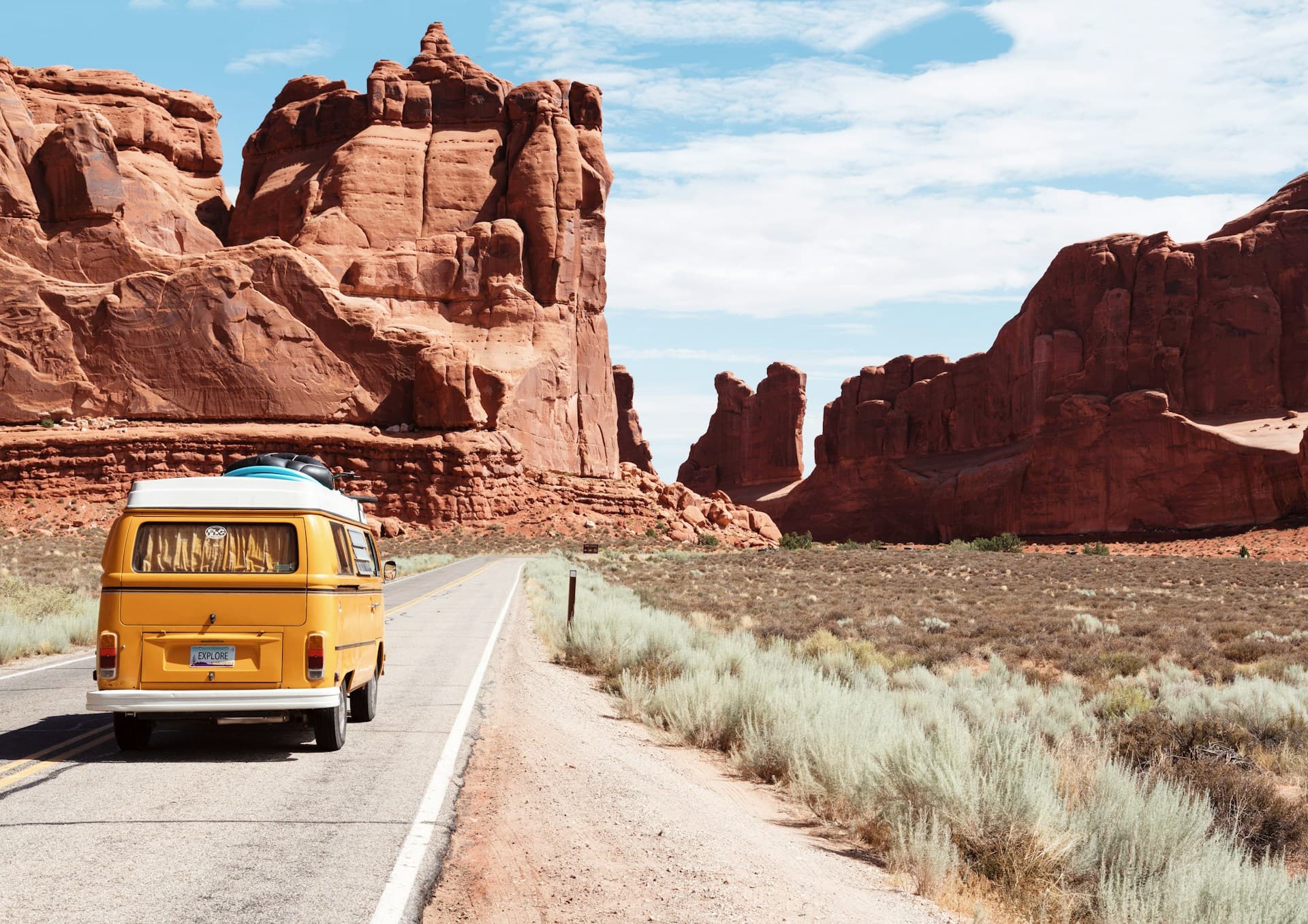
The NC RV Dilemma: Mountains or Coast?
North Carolina is one of the most versatile RV destinations in America, and that abundance of choice creates a genuine dilemma for travelers. You can spend your days hiking among 6,000-foot peaks in the Blue Ridge Mountains, watching waterfalls plunge into emerald valleys, and breathing air that feels like living altitude. Or you can wake to salt spray, hunt for shells on 70 miles of undeveloped beach, and chase wild horses through maritime forests. The question isn't whether North Carolina offers excellent RV camping—it absolutely does—but whether you're chasing mountains or ocean horizons.
The decision shapes everything: your daily activities, what you pack, how often you fill your water tank, and which parks will welcome your rig. Mountain camping (think Asheville, Cherokee, and the Great Smoky Mountains) appeals to hikers, watchers of fall foliage, and anyone fleeing July heat. Coastal camping (the Outer Banks, Cape Hatteras, Ocracoke) calls to surfers, history buffs, lighthouse enthusiasts, and travelers who define vacation as barefoot and salty. This guide cuts through that choice by laying out the honest comparison: what each region truly offers, what it costs, how the weather treats you, and which fits your style. Read on to find your answer—or discover why you should do both.
The Mountains Case
The Most Visited National Park in America (And It's Free)
Great Smoky Mountains National Park is not a hypothetical destination. It draws more than 13 million visitors annually, making it America's most visited national park, and here's the remarkable part: there is no entrance fee. Zero. You roll your RV through the gate and start exploring 800 miles of trails, from gentle riverside walks to backcountry challenges that demand serious elevation gain. Clingmans Dome, the highest point in Tennessee, sits at 6,643 feet and delivers observation tower views that stretch across three states on clear days. The park spans the North Carolina-Tennessee border, and the North Carolina side is where most RV camping happens. The elevation offers a natural cooler, the dense forest canopy means shade even in midsummer, and the pure volume of trails means you'll never run out of things to explore.
For RV travelers, GSMNP represents something rare: world-class outdoor access without a entry cost, without reservation anxiety (day use, no permits required), and with a network of developed campgrounds nearby. Cataloochee Valley, on the North Carolina side, is where you'll see elk herds grazing in open meadows—a wildlife experience you cannot get on the coast. The park's cultural heritage valleys offer historic homesteads, log cabins from the 1800s, and a palpable sense of Appalachian history. September through October is peak hiking season, when the air is cool, the crowds are intense but manageable, and wildflowers are still blooming in high-elevation balds.
The Blue Ridge Parkway: 252 Miles of Scenic Driving with No Tolls
The Blue Ridge Parkway snakes through 470 miles total, but 252 of those miles thread through North Carolina, and they are among the most spectacular. There is no entrance fee, no toll stations, and a mandatory 45-mph speed limit that actually works in your favor—it forces you to slow down and notice the views. The parkway is closed during winter weather events (November through March you may encounter ice closures), but during peak season, 26 North Carolina tunnels cut through solid rock, and here is where your RV size matters: all have a 13-foot minimum clearance. If your rig is taller than 13 feet, the parkway is not an option. If it fits, you're in for one of the most serene drives in America.
October 5 through October 20 is peak foliage season, when the mountains transform into a canvas of amber, crimson, and gold. Towns like Asheville sit directly on the parkway, meaning you can post up in an RV park with full hookups and day-trip access to overlooks, waterfalls, and hiking trailheads. The parkway connects seamlessly to GSMNP, so you can build an entire week around parkway drives and mountain exploration. There are NPS-managed campgrounds along the parkway itself (typically 20 to 33 dollars per night), as well as private parks in nearby towns that charge 40 to 75 dollars for full hookup sites.
Summer Temperatures: 10 to 15 Degrees Cooler Than the Coast
This is the mountains' ace card. Asheville's average high in July is 81 degrees Fahrenheit. Cherokee, at the gateway to GSMNP, averages 84 degrees. Now compare that to the Outer Banks, where July highs hover at 88 to 93 degrees and the heat index regularly breaks 100. If you are planning to RV in July or August, the mountains are not a preference—they are a necessity. The combination of elevation, forest cover, and mountain air currents creates a microclimate where you actually want to hike at midday, where nights cool into the 50s, and where your air conditioning runs a fraction as hard.
This matters for full-time RVers and anyone on a budget. Lower AC usage means lower propane consumption, which stretches your travel days. It also means better sleeping conditions—mountain nights are genuinely cool, even in summer. If you're traveling with kids, the temperature difference translates into more outdoor play time and happier campers. The trade-off is that you'll need layers for mornings and evenings, even in summer. But for many travelers, that's a small price for genuine relief from summer heat.
The Coast Case
Cape Hatteras: 70 Miles of Undeveloped Beach and the First National Seashore
Cape Hatteras National Seashore was America's first national seashore, established in 1953, and it protects 70 miles of barrier island that feels genuinely wild. There are no boardwalks, no amusement parks, no commercial sprawl. There are ORV beaches where you can drive your vehicle onto the sand, lighthouses where you can climb to observation decks, and shipwreck history—this is the "Graveyard of the Atlantic," where hundreds of vessels have gone down over four centuries. For RV travelers, the NPS campgrounds charge 28 dollars per night and offer a level of sandy-beach authenticity that private parks cannot match.
The Outer Banks draw surfers, kiteboard enthusiasts, and history fanatics. The winds here are consistent and strong, which is perfect if you're chasing wind sports and terrible if your RV catches a broadside gust in an exposed campground. The wild horses of Corolla and Ocracoke Island are real—they roam freely and can be seen from the road, a coastal experience with zero mountain equivalent. The soundside (Pamlico Sound, Roanoke Sound) is calmer and perfect for kayaking, paddleboarding, and crabbing. If you are into fishing, the Outer Banks offer surf fishing, inlet fishing, and charter opportunities that make mountain streams look tiny by comparison.
Wright Brothers National Memorial: Where Aviation Was Born
On December 17, 1903, Orville and Wilbur Wright launched the first powered, heavier-than-air flight from Kill Devil Hills. The Wright Brothers National Memorial sits on 428 acres and includes the original launch site, a reconstructed Wright Flyer, and a visitor center that draws history lovers of all ages. This is not a 30-minute stop—families spend half a day here. The memorial is free to enter (like GSMNP), and the story of two bicycle mechanics from Ohio who solved the riddle of flight in isolation on a North Carolina beach is genuinely inspiring. The nearby town of Kill Devil Hills has evolved into a full-service RV destination with numerous private parks offering 50-amp service and all modern amenities.
The Outer Banks' historical footprint extends beyond aviation. Blackbeard's hideouts, pirate artifacts, and centuries of shipwreck lore attract guests who want their vacation layered with discovery. The Lost Colony, performed nightly during summer season, is America's longest-running outdoor theatrical production and tells the story of the first English settlement in North America—which vanished without a trace. These cultural attractions give the coast a narrative depth that complements the natural beauty.
Beach Culture, Seafood, and Sunsets Over the Sound
The Outer Banks summer culture is undeniable. Start your morning with fresh-caught hatteras blues (striped bass) at a waterfront restaurant. Spend the day on the beach, fishing, swimming, or watching kiteboard athletes perform aerial tricks. End it with soft-shell crab and shrimp at a local joint, then position your RV to catch the sunset over Pamlico Sound (the bay-side view is actually more spectacular than the ocean-facing one). The Outer Banks offer seasonal energy that mountains simply cannot replicate.
This is particularly true for families with kids. The beach offers a day-use structure that mountains lack: beach time, lunch break, more beach time, ice cream, s'mores at night. The water temperature from July through September hovers in the mid-70s, warm enough for extended swimming. Lighthouses are climber-friendly for older kids. The nearby towns of Nags Head, Kill Devil Hills, and Manteo have visitor infrastructure—restaurants, shops, entertainment—that makes it easy to take a night off from campfire cooking. If your definition of vacation includes sand between your toes and fresh seafood, the coast wins.
Side-by-Side Comparison Table
| Factor | Mountains | Coast (OBX) |
|---|---|---|
| Summer high temp | 76–84°F | 88–93°F |
| Peak season | Jun–Oct | Memorial Day–Labor Day |
| NPS campground rate | $20–$33/night | $28/night |
| Full hookup rate | $40–$75/night | $55–$85/night |
| RV size concerns | Tunnel clearance 13 ft min | Bridge clearances fine, wind exposure |
| Wildlife | Black bear, elk (Cataloochee), deer | Wild horses (Corolla/Ocracoke), dolphins, shorebirds |
| Activities | Hiking, waterfalls, fly fishing | Surf fishing, kiteboarding, lighthouse, history |
| Best for | Coolness, nature immersion, solitude | Beach culture, history, seafood, sunsets |
Which Should You Choose?
Here are the decision gates: If your RV is taller than 13 feet, the Blue Ridge Parkway is off-limits, and that eliminates a major mountain-region draw. The coast, with wider roads and bridge engineering designed for full-size vehicles, poses no height restrictions. If you are traveling in July or August, the mountains are cooler by a measurable and noticeable 10 to 15 degrees—enough to reshape your daily experience. If you have young kids, the coast offers a beach-based structure that younger children find intuitive and fun. If you are a serious hiker or backcountry enthusiast, the mountains offer unmatched trail density and the irreplaceable experience of elevation gain and wilderness immersion.
The best answer for many RV travelers is not either/or—it is both. A four-week North Carolina loop works like this: start in the Asheville area and spend three nights in a mountain park, day-tripping GSMNP and scenic drives. Then head south on the Blue Ridge Parkway toward Cherokee (if your rig clears 13 feet). From Cherokee, drive east toward the coast—a five to six-hour drive via US-64 to the Outer Banks. Post up for four to five nights in a Cape Hatteras or Kill Devil Hills park and explore the seashore, Wright Brothers, and beach culture. You see two distinct North Carolina seasons, cover roughly 500 miles, and prove the old saying that you don't have to choose—you just have to have enough time to do it right. NC Outer Banks RV Parks and Western NC Mountains RV Parks both offer curated park listings to help you plan.
Frequently Asked Questions
Can I do both mountains and coast in one trip?
Yes, absolutely. A four-day mountain segment and four-day coast segment is fully achievable. The Asheville-to-Outer-Banks drive is five to six hours via US-64. Alternatively, you can base yourself near Charlotte (central location) and split your time on separate day trips. North Carolina is compact enough that you can see two dramatically different regions without driving more than six hours between them.
What is the drive time from Asheville to the Outer Banks?
Plan for five to six hours of driving via US-64 east through Greensboro and onward to the coast. If you take a scenic route through the Piedmont and the Crystal Coast, add an extra hour. Stop in small towns along the way (Greensboro, High Point, Asheboro) if you want to break up the drive. Most RV travelers do this as a single travel day with a lunch break.
Is Great Smoky Mountains National Park really free?
Yes. GSMNP has no entrance fee and is the only national park in the United States with no admission cost. Day use is completely open—roll in whenever you want, hike, explore, and head back to your RV park. There are no reservation requirements for day use, no permits for regular hiking. This makes GSMNP uniquely accessible for budget-conscious travelers.
When does the Blue Ridge Parkway close in winter?
The parkway remains open year-round for day use, but sections close periodically during ice events, fog, and winter weather, primarily November through March. Before driving, check nps.gov/blri for current closure information. Some tunnel sections may have height or clearance restrictions during maintenance. Call ahead or check the NPS website to confirm your rig will pass through safely.
Which region is better for families with kids?
Both excel, but differently. The coast offers beach days, lighthouse climbing, the Wright Brothers Memorial, and a town-based infrastructure (ice cream shops, restaurants, activities). Kids intuitively understand beach time. The mountains offer the drama of GSMNP, waterfalls you can actually reach on short hikes, easy wildlife spotting (especially elk in Cataloochee), and cooler temperatures that make midday activities comfortable. Older kids tend to prefer mountains; younger kids often prefer coast. The ideal answer is to do both.
North Carolina gives you a genuine choice—not between good and better, but between two distinct and equally excellent versions of the RV experience. The mountains offer elevation, coolness, ancient trails, and a kind of silence you will not find elsewhere. The coast offers salt air, history, fresh seafood, and the rhythm of tides and sunsets. Neither is objectively superior. The right choice is the one that matches who you are as a traveler. And if you cannot decide, you have just given yourself permission to stay longer and see both. Cape Hatteras RV camping and the western mountains are waiting.
Thinking About Selling Your NC RV Park?
Whether your park is nestled in a mountain holler near the Blue Ridge Parkway or positioned on a barrier island road in the Outer Banks, NC parks are among the most coveted in the Southeast. Mountain corridor parks trade at 9–13% cap rates; OBX parks with established summer clientele often clear 8–12% with premium per-site revenue. If you're considering a sale, I'd welcome the conversation. I'm Jenna Reed, Director of Acquisitions at rv-parks.org — reach me at jenna@rv-parks.org or visit /sell to get started.