Quick Definition
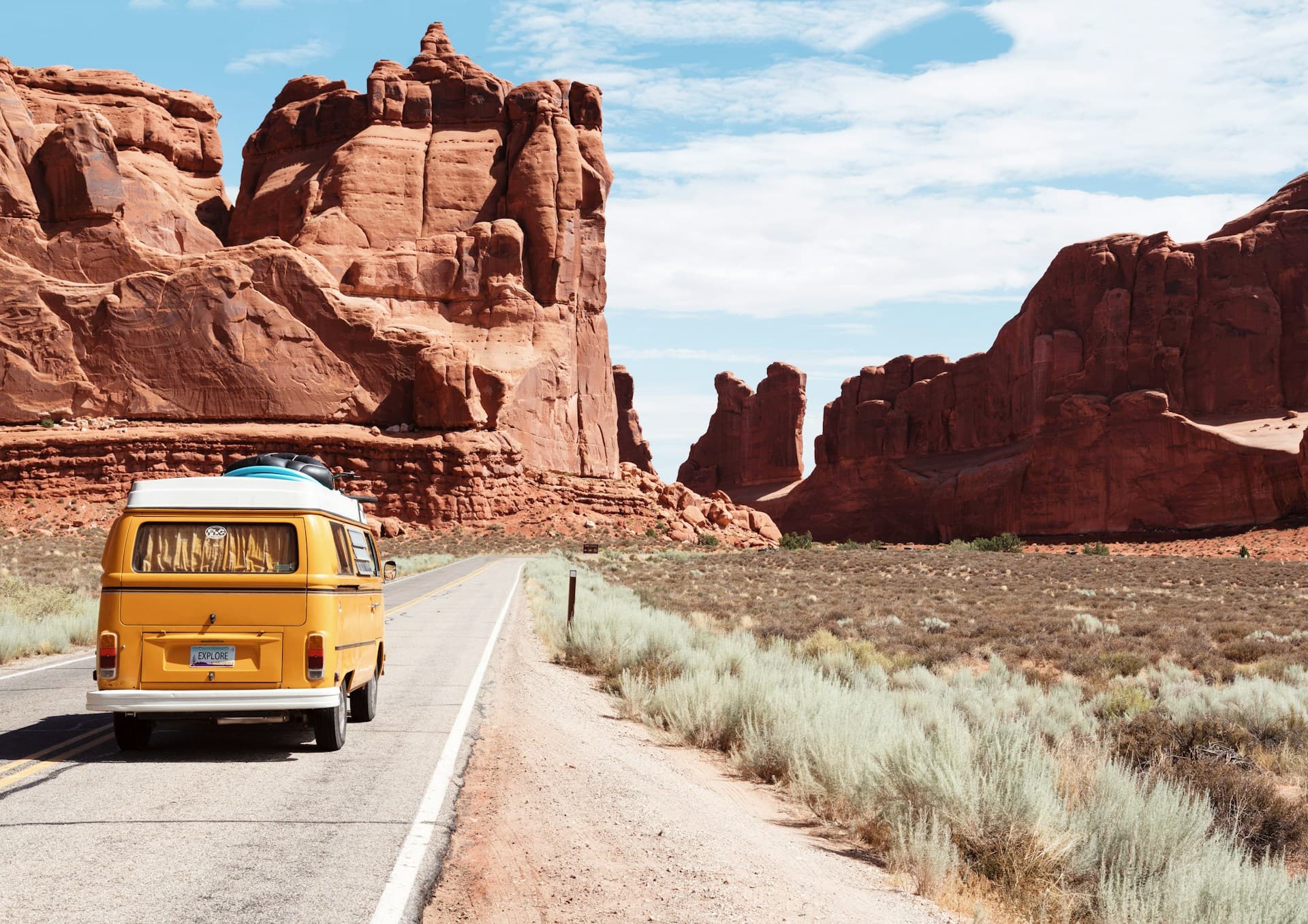
Utah is the ultimate RV destination for outdoor enthusiasts seeking a blend of world-class national parks, stunning scenic byways, and accessible campgrounds that range from luxury full-hookup resorts to remote BLM boondocking sites. The state's five signature national parks—Zion, Bryce Canyon, Arches, Canyonlands, and Capitol Reef—form the "Mighty 5" corridor that draws millions of visitors annually, while 13 state parks, countless USFS and BLM campgrounds, and private RV resorts create a comprehensive network for every budget, rig size, and travel style. Whether you're looking for high-end amenities with Wi-Fi and pull-through sites or backcountry solitude under red rock cliffs, Utah RV Parks deliver an unmatched combination of natural beauty, diverse terrain, and RV-friendly infrastructure across the state's 84,899 square miles.
TL;DR
- Best season: March through October; St. George and southern Utah offer year-round camping due to lower elevation
- Core regions: Southwest (Zion/St. George), Canyon Country (Moab/Arches/Canyonlands), Wasatch Front (Salt Lake City), and Central/Eastern (Capitol Reef/Bryce)
- Mighty 5 essentials: RV Parks Near Arches National Park let you tackle all five in 10-14 days with advance bookings
- Nightly rates: Full-hookup resorts $55-90; state park sites $15-45; BLM boondocking free or donation-based
- Timed entry: Arches requires $30/vehicle entrance reservation April-October via recreation.gov; Angels Landing now lottery-only
- Peak planning: Book 2-3 months ahead for March-May and September-October; July-August offers lower competition but intense heat
Utah RV Camping Regions
Utah breaks naturally into four RV camping regions, each with distinct terrain, attractions, and accessibility.
Southwest Utah (St. George, Zion, Cedar Breaks) sits at lower elevation (St. George at 2,860 feet) and extends into the red-rock country around Zion National Park, Hurricane, and Springdale. This region is the most RV-friendly year-round, with winter temps rarely dropping below freezing and spring/fall offering ideal 60-75°F weather. Full-hookup resorts dominate the landscape here, and you'll find pull-through sites, laundry facilities, and Wi-Fi widely available. The main challenge is that popular Zion-adjacent parks fill 60-90 days out, and summer heat (110°F is common) can make daytime travel uncomfortable. The region supports multi-day Zion hikes, scenic drives like the Zion-Mount Carmel Highway, and access to Cedar Breaks National Monument.
Canyon Country (Moab, Arches, Canyonlands, Dead Horse Point) centers on the Colorado River corridor and is the adventure capital of Utah RV camping. Moab serves as the hub, offering high-quality resorts, mountain biking trails (especially Slickrock), 4x4 routes, and direct access to Arches and Canyonlands. Elevation here ranges from 3,600-5,500 feet, making spring and fall ideal and summers hot but manageable. Arches requires timed entry reservations April-October, so book early. Dead Horse Point and nearby state parks offer dramatic overlooks and partial-hookup camping. This region fills fast during weekends and peak leaf-peeping season (late September to early October).
Wasatch Front (Salt Lake City, Park City, Ogden) is the population center and offers urban amenities, proximity to skiing, and access to the Uinta Mountains. Elevation runs 4,200-6,000 feet, making summer and early fall the sweet spot. RV parks here cater to travelers passing through or using SLC as a logistics hub, with numerous full-hookup options and access to I-15 and I-80. This region experiences cold winters and is less scenic than the national park areas, but offers services, grocery stores, and a good base for northern Utah exploration.
Central and Eastern Utah (Capitol Reef, Bryce Canyon, Escalante) is the quieter, more remote region featuring some of Utah's most photogenic geology and the UT-12 Scenic Byway—consistently ranked among America's most scenic drives. Capitol Reef sits at 3,800-6,000 feet elevation and is famous for fruit orchards, historic homesteads, and slot canyons. Bryce Canyon, perched at 9,000 feet, offers a cooler summer alternative but requires caution in winter when snow closes roads. This region has fewer full-hookup options and requires more advance planning, but the solitude and scenery reward the effort. Fall colors peak mid-September to mid-October as aspen change at higher elevations.
Best RV Parks in Utah
| Park Name | Location | Full Hookups | Pull-Thru | Nightly Rate | Pets | Wi-Fi |
|---|---|---|---|---|---|---|
| Moab Valley RV Resort | Moab/Arches | Yes | Yes | $70-90 | Yes | Yes |
| Ruby's Inn RV Park | Bryce Canyon | Yes | Yes | $60-75 | Yes | Yes |
| Salt Lake City KOA SLC/Wasatch | Yes | Yes | $75-85 | Yes | Yes | |
| Thousand Lakes RV Park | Torrey/Capitol Reef | Yes | No | $55-65 | Yes | Yes |
| Antelope Island SP Campground | Great Salt Lake | No | N/A | $15-25 | No | No |
| Dead Horse Point SP | Canyonlands Area | Partial | N/A | $35-45 | No | No |
| Goblin Valley SP | Central Utah | Partial | N/A | $25-35 | No | No |
| Bear Lake KOA Northeast Utah | Yes | Yes | $40-60 | Yes | Yes |
What to Do & See
Utah's RV camping appeal rests on access to five world-class national parks and dozens of equally stunning secondary attractions.
The Mighty 5 form the core experience. Zion National Park showcases soaring red sandstone cliffs, with hikes ranging from 30-minute rim walks to full-day scrambles like Angels Landing (now lottery-only for permits since 2022). Bryce Canyon offers amphitheater hoodoo formations best photographed at sunrise or sunset. Arches near Moab delivers iconic red arches, with the entrance tunnel and Devil's Garden trail accessible via day-use parking (though timed entry is required April-October). Canyonlands presents vast canyon systems and 4x4 routes; the Island in the Sky district is the most RV-accessible. Capitol Reef rounds out the five with water access, canyoneering routes, and the picturesque UT-12 Scenic Byway leading east to Escalante.
Beyond the Mighty 5, Antelope Island State Park on the Great Salt Lake offers a unique island ecosystem, bison herds, and lakeside camping with panoramic views of the Wasatch Mountains. The Bonneville Salt Flats in northwest Utah create a surreal 30,000-acre white expanse perfect for photography and is accessible on a day trip from Salt Lake City. Dinosaur National Monument on the Utah-Colorado border offers river trips and fossil sites. Great Salt Lake itself has multiple state parks and scenic overlooks.
Scenic byways multiply Utah's appeal: US-89 runs north-south through Kanab, Panguitch, and Escalante with red-rock views at every turn; UT-12 between Bryce and Capitol Reef is a National Scenic Byway threading through aspen forests and desert; US-191 follows the Colorado River north from Moab; I-70 traverses central Utah with pullouts at Cisco Desert and San Rafael Swell. Fall colors peak September 15-October 15 in the mountains as aspen turn gold, and these byways become even more photogenic.
Cost Math
Utah RV camping costs vary dramatically by location, season, and park type.
Nightly rates at full-hookup resorts range from $55-90 depending on season and location. Southwest resorts near Zion and St. George run $70-90 in peak season (March-May, September-October) and $50-70 in off-season. Moab resorts average $70-85 year-round due to consistent demand. Smaller towns like Torrey (Capitol Reef) and Panguitch (Bryce) offer $50-65 rates. State parks with partial hookups run $25-45, and primitive camping on BLM land is free or donation-based (typically $5-10 if staffed).
Entry fees add up. National park entrances cost $35/vehicle for a 7-day pass (no charge for holders of America the Beautiful Pass). Timed entry at Arches adds $30/vehicle April-October. Angels Landing permits are free but lottery-only. State parks charge day-use fees of $5-15 per vehicle.
Weekly budget example: Budget $500-700 for a week at a mid-range full-hookup resort ($70/night), plus $100 in entrance fees, $50 in gas, and $200 in groceries for a self-catering couple. A budget trip using state parks and BLM camping runs $250-350 weekly. Extended stays of 14+ days often qualify for discounts at private resorts (10-20% off nightly rates).
Seasonal pricing: March-May and September-October command peak rates and require 60-90 day advance bookings. June-August rates drop 10-20% but expect intense heat (105-115°F in some areas). November-February offers the lowest rates but brings weather unpredictability in higher elevations; St. George remains accessible year-round.
Practical Tips
Utah RV camping requires attention to elevation, heat, timed entry logistics, and booking lead times.
Elevation matters. Zion and Moab sit at 3,600-4,500 feet; Bryce and Capitol Reef range 3,800-9,000 feet. Rapid elevation gain can trigger altitude sickness in sensitive travelers—arrive a day early to acclimate. Higher elevations mean cooler summers but snow risk November-March. Arches and Canyonlands at 5,000+ feet offer a middle ground with mild spring and fall temps.
Heat management is critical. July-August brings 105-115°F temps in St. George and Moab, making daytime sightseeing brutal. Start hikes at 6am, take long midday breaks, and carry 3+ liters of water per person. RV parks with shade (large trees) are worth the premium in summer. Cool overnight temps (60-70°F) make sleeping comfortable, and many parks offer shade structures or mature landscaping.
Timed entry to Arches (April-October, $30/vehicle) requires advance reservation via recreation.gov, typically available 7 days ahead. Book immediately at midnight when new dates open. Without a reservation, day-use parking fills by 8-9am, and you'll be turned away.
Booking lead times vary by season. For peak (March-May, September-October), reserve 60-90 days ahead for top-tier resorts. Off-season (June-August, November-February) allows 30-day bookings. BLM sites are first-come, first-served but fill quickly on weekends.
Cell service is spotty in remote areas; download offline maps (Google Maps, AllTrails, iExit) before departure. Verizon generally has the best coverage, followed by AT&T; T-Mobile has gaps in rural canyons.
BLM boondocking offers free or low-cost dispersed camping on public land throughout Utah. Sites are primitive (no water, no hookups) but stunning. Use iExit or Dyrt apps to locate them and always pack your own water and fuel. Leave no trace applies strictly.
Best RV Parks in Utah should be booked far in advance during peak season, and cancellation policies vary—read them carefully in case weather forces changes. Many parks offer loyalty discounts for multi-night stays.
FAQ
Is Utah good for first-time RV campers? Yes, especially if you stick to resorts in the Southwest region (St. George, Zion area) which offer full hookups, good roads, and proximity to services. The Mighty 5 corridor is well-established for RV travel, and most roads are suitable for standard Class A and Class C rigs up to 35-40 feet. Avoid narrow UT-12 and high-altitude forest roads in smaller rigs.
When is the absolute best time to visit Utah for RV camping? Late April through May and late September through October offer ideal temps (65-80°F), lower crowds than summer, and easier booking than peak March-April. Fall foliage peaks September 15-October 15 in the mountains. Winter (December-February) is best avoided unless you have cold-weather gear, though St. George remains accessible.
Do I need four-wheel-drive or high-clearance for Utah's scenic drives? No. Highways and main byways (US-89, UT-12, US-191, I-70) are fully paved and suitable for standard RVs. The Shafer Trail and some 4x4 routes require off-road vehicles, but 95% of Utah's major attractions are highway-accessible.
Can I camp for free in Utah? Yes. BLM dispersed camping is free throughout much of eastern and central Utah. State parks charge $15-45 nightly. Private resorts range $55-90. Boondocking on public land requires self-sufficiency (water, fuel, waste) and adherence to Leave No Trace principles.
How far apart are the Mighty 5 parks, and can I visit them all? Zion to Bryce is 85 miles (2 hours); Bryce to Capitol Reef is 110 miles (2.5 hours); Capitol Reef to Canyonlands is 150 miles (3+ hours); Canyonlands to Arches is 35 miles (45 minutes). Zion to Arches is 500+ miles. A 10-14 day loop hitting all five is feasible if you plan carefully and book accommodations in advance.
What's the difference between Canyonlands and Arches? Arches is famous for its iconic red arches and is more compact and accessible (one entry point, concentrated attractions). Canyonlands is vast (330,000 acres), requires more time to explore, and offers diverse districts (Island in the Sky, Needles, Maze). Arches is better for a short visit; Canyonlands rewards a full day minimum.
Do I need a vehicle or boat to explore everything? Standard RVs and tow vehicles handle most attractions. Canyonlands' Island in the Sky offers scenic drives and short walks. The Needles district requires more driving and hiking. Boat access is available for some canyons (requires permits and experience). Most travelers navigate via RV + day-use vehicle (car or small truck).
Are there any RV length restrictions in Utah parks? Yes. Zion's main canyon road (Zion Canyon Scenic Drive) prohibits RVs over 40 feet and 8 feet wide. Arches and Canyonlands have no vehicle-length restrictions on main roads, but parking lots may be tight for large rigs. Capitol Reef and Bryce roads are generally RV-friendly for Class A and smaller Class C (up to 35-40 feet). Check with individual parks for specifics on your rig size.
Is the Angels Landing hike still accessible, and how do I get a permit? Angels Landing has been permit-only since 2022 due to overcrowding and safety concerns. The 5.4-mile round-trip is one of Utah's most iconic hikes but includes a steep final scramble and a 1,000-foot drop-off. Permits are awarded via a lottery system; enter months in advance at recreation.gov. If you don't win the lottery, Hidden Canyon and other Zion trails offer stunning alternatives without permits.
Can I visit Utah in winter, and what precautions should I take? Winter (November-February) is feasible in the lowlands (St. George, Moab) but risky in higher elevations. St. George averages 50°F in January and rarely freezes. Bryce Canyon and Capitol Reef can see heavy snow and road closures. Carry chains, have cold-weather insulation for your RV, book parks with guaranteed power hookups, and monitor road conditions closely via Utah DOT and UDOT traffic alerts before traveling.
Thinking About Selling
If you own an RV park in Utah—whether it's a small state-park concession, a growing mid-market resort, or a mature multi-park operation—the market is moving fast. Utah's RV park ownership landscape is increasingly attractive to institutional investors, fund managers, and experienced operators who recognize the state's permanent tailwinds: no income tax, a diverse and growing base of state parks and USFS partnerships, and the Mighty 5's staying power as a bucket-list destination.
The outdoor hospitality market is consolidating, cap rates are compressing in prime locations, and asset values have risen steadily since 2019. If you've been thinking about an exit—whether to fund retirement, redeploy capital, or pass the business to new hands—this is the moment. The buyers are here, and they're looking specifically for Utah properties with strong seasonal patterns, loyal repeat customers, and proximity to national parks.
We work with park owners to understand the full picture: your financials, your operational challenges, your growth ceiling, and your timeline. We've navigated dozens of deals in the Southwest and Mountain West, and we know what makes a park valuable versus what looks good on a spreadsheet but falls apart in due diligence.
If you'd like to explore your options without pressure or disruption to your business, reach out to us at /sell. We're here to listen, answer questions, and help you think through what comes next.
Interested in RV parks and outdoor hospitality? Jenna Reed leads acquisitions and partnerships at rv-parks.org. Contact her at jenna@rv-parks.org with questions, leads, or if you're ready to explore selling or partnering.